Wednesday, June 18, 2025

Office of Scholarly Communication resource on the Revised NIH Public Access Policy - June 18, 2025

Guidance on the Revised NIH Public Access Policy, Effective July 2025:  https://osc.universityofcalifornia.edu/scholarly-publishing/policies-legislation/nih-public-access-2025/ 

 In advance of the implementation of the revised NIH public access policy, effective July 1, 2025, an Office of Scholarly Communication/Project Transform joint working group (including UC faculty and representatives from UC libraries and research offices) has developed guidance for the UC OSC site to assist UC authors in understanding and complying with the policy. We hope you and your campus community find this resource helpful. If you have any questions or comments, please contact us at osc@ucop.edu

Wednesday, April 30, 2025

Accelerating Access to Research Results: New Implementation Date for the 2024 NIH Public Access Policy - April 30, 2025

NIH Accelerates Effective Implementation Date for Public Access Policy to July 1, 2025

I am excited to announce that one of my first actions as NIH Director is pushing the accelerator on policies to make NIH research findings freely and quickly available to the public. The 2024 Public Access Policy, originally slated to go into effect on December 31, 2025, will now be effective as of July 1, 2025.

To be clear, maximum transparency regarding the research we support is our default position. Since the release of NIH’s 2008 Public Access Policy, more than 1.5 million articles reporting on NIH-supported research have been made freely available to the public through PubMed Central. While the 2008 Policy allowed for an up to 12-month delay before such articles were required to be made publicly available, in 2024, NIH revised the Public Access Policy to remove the embargo period so that researchers, students, and members of the public have rapid access to these findings.

NIH is the crown jewel of the American biomedical research system.  However, a recent Pew Research Center study(link is external) shows that only about 25% of Americans have a “great deal of confidence” that scientists are working for the public good.  Earlier implementation of the Public Access Policy will help increase public confidence in the research we fund while also ensuring that the investments made by taxpayers produce replicable, reproducible, and generalizable results that benefit all Americans.   

Providing speedy public access to NIH-funded results is just one of the ways we are working to earn back the trust of the American people. Trust in science is an essential element in Making America Healthy Again.  As such, NIH and its research partners will continue to promote maximum transparency in all that we do.    

Jay Bhattacharya, M.D., Ph.D.
Director, National Institutes of Health

Friday, August 16, 2024

Article: Meetz J et al.. 2024. “Empowering Early Career Humanities Researchers to Successfully Navigate the Scholarly Publishing Process.” Public Services Quarterly 20 (3): 161–75

 Meetz, Johanna, Jennifer Schnabel, Maria Scheid, and Ana Maria Jimenez-Moreno. 2024. “Empowering Early Career Humanities Researchers to Successfully Navigate the Scholarly Publishing Process.” Public Services Quarterly 20 (3): 161–75. doi:10.1080/15228959.2024.2365154.

Abstract

This case report illustrates how a scholarly communication librarian partnered with a humanities subject librarian and others to address knowledge gaps that graduate students and early career researchers at a large public research institution have about the scholarly publishing landscape. To address frequently asked questions the organizers identified from their individual experiences working with researchers, they chose a panel format where each speaker responded to a common scenario posed by a moderator. The webinar was recorded and shared internally on various sites as a reference. Feedback indicated the webinar was informative and helpful, and organizers plan to use it as a blueprint for future webinars or videos on specific topics about scholarly publishing.

Monday, February 12, 2024

NIST Research Data Framework and USDA Public Access Plan - febraruy 12, 2024

The National Institute of Standards and Technology (NIST) released version 2.0 of its Research Data Framework (RDaF). The RDaF is available as both a publication and interactive web application. The framework is a tool that brings together information and resources on research data to support organizations and individuals in the management and dissemination of data. Version 2.0 expanded subtopics and added more profiles based on community feedback and serves as a comprehensive map of the research data ecosystem. Organizations, including universities, have already begun using earlier versions of the RDaF in their research data management activities. 

The U.S. Department of Agriculture (USDA) opened a second comment period on its draft public access plan and comments will close on February 28th at 5 pm ET. USDA also announced a Q&A Session scheduled for February 20th at 12 pm ET to discuss its draft plan and answer questions. SPARC will be providing public comments and will share them with members as soon as they are submitted. 

Katie Steen-James

SPARC | Manager of Public Policy & Advocacy 

katie@sparcopen.org

816-645-1189 (c)

@katiesteen627

she/her

Tuesday, January 16, 2024

New Open Access Book from eScholarship Publishing: The Art of Diversity by Susan Carlson - January 16, 2024


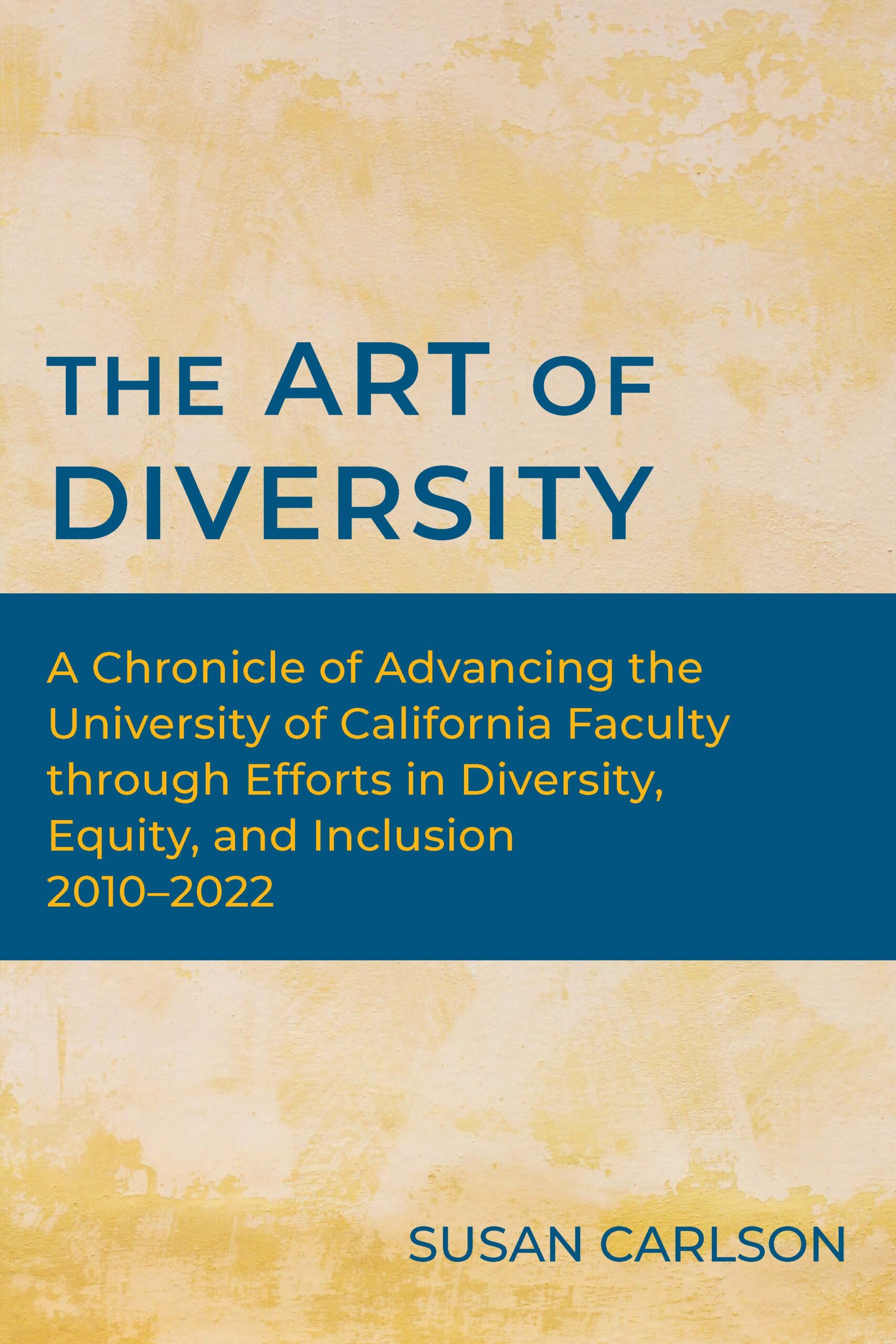
Book cover, yellow background with blue horizontal stripe across the middle. Title, "The Art of Diversity," in blue above the stripe, and subtitle "A Chronicle of Advancing the University of California Faculty through Efforts in Diversity, Equity, and Inclusion 2010-2022" in yellow on the stripe.

eScholarship Publishing, University of California, announces a new open access book release: The Art of Diversity: A Chronicle of Advancing the University of California Faculty through Efforts in Diversity, Equity, and Inclusion, 2010–2022 by Susan Carlson.

In this institutional history, Carlson details the University of California’s systemwide efforts to increase the diversity of its faculty during her tenure as Vice Provost, UC Office of the President. It tells the story of a remarkable alignment of California stakeholders—from the UC Regents and University leaders to the Academic Senate and the California legislature, from small faculty teams to multicampus coalitions—and how they worked to create a 21st-century faculty that reflects the diversity of California.

-- more -- 

Monday, November 6, 2023

Open Book Collective: Collective Path Toward an Open and Sustainable Monograph Future - Lidia Uziel - Nov. 6, 2023

 The Open Access (OA) publishing movement is at our doorstep. However, as an academic community, we are not yet ready to fully embrace and support the OA monograph transformation.   Books continue to lag behind journals in terms of OA publishing, infrastructure, and distribution.   The Open Book Collective (OBC) provides some key solutions for the existing challenges while charting a new collective path toward an open and sustainable monograph future.  The proliferation of OA policy mandates and library-funded OA pilots led by academic publishers or scholar-led presses combined with recent developments in infrastructural support for OA book publishing are important milestones […]

The post Open Book Collective: Collective Path Toward an Open and Sustainable Monograph Future appeared first on Office of Scholarly Communication.

Friday, May 26, 2023

FACT SHEET: Biden-⁠Harris Administration Takes New Steps to Advance Responsible Artificial Intelligence Research, Development, and Deployment - May 23, 2023

 Sharing the Fact Sheet released by the White House on May 23, 2023.


MAY 23, 2023

FACT SHEET: Biden-Harris Administration Takes New Steps to Advance Responsible Artificial Intelligence Research, Development, and Deployment

Today, the Biden-Harris Administration is announcing new efforts that will advance the research, development, and deployment of responsible artificial intelligence (AI) that protects individuals’ rights and safety and delivers results for the American people.

AI is one of the most powerful technologies of our time, with broad applications. President Biden has been clear that in order to seize the opportunities AI presents, we must first manage its risks. To that end, the Administration has taken significant action to promote responsible AI innovation that places people, communities, and the public good at the center, and manages risks to individuals and our society, security, and economy. This includes the landmark Blueprint for an AI Bill of Rights and related executive actions, the AI Risk Management Framework, a roadmap for standing up a National AI Research Resource, active work to address the national security concerns raised by AI, as well as investments and actions announced earlier this month. Last week, the Administration also convened representatives from leading AI companies for a briefing from experts across the national security community on cyber threats to AI systems and best practices to secure high-value networks and information.

Today’s announcements include:

  • An updated roadmap to focus federal investments in AI research and development (R&D): The White House Office of Science and Technology Policy (OSTP) is releasing a National AI R&D Strategic Plan—updated for the first time since 2019—a roadmap that outlines key priorities and goals for federal investments in AI R&D. Developed by experts across the federal government and with public input, this plan makes clear that when it comes to AI, the federal government will invest in R&D that promotes responsible American innovation, serves the public good, protects people’s rights and safety, and upholds democratic values. It will help ensure continued U.S. leadership in the development and use of trustworthy AI systems.
  • A new request for public input on critical AI issues: OSTP is issuing a Request for Information (RFI) to seek input on national priorities for mitigating AI risks, protecting individuals’ rights and safety, and harnessing AI to improve lives. This RFI will support the Administration’s ongoing effort to advance a cohesive and comprehensive strategy to manage AI risks and harness AI opportunities. It complements work happening across the federal government to engage the public on critical AI issues.
  • A new report on the risks and opportunities related to AI in education: The U.S. Department of Education’s Office of Educational Technology is releasing a new report, Artificial Intelligence (AI) and the Future of Teaching and Learning: Insights and Recommendations, summarizing the risks and opportunities related to AI in teaching, learning, research, and assessment. The report recognizes that AI can enable new forms of interaction between educators and students, help educators address variability in learning, increase feedback loops, and support educators. It also underscores the risks associated with AI—including algorithmic bias—and the importance of trust, safety, and appropriate guardrails.

In addition to these new announcements, the White House is hosting a listening session with workers today to hear firsthand experiences with employers’ use of automated technologies for surveillance, monitoring, evaluation, and management. The listening session will include workers representing diverse sectors of the economy, including call centers, trucking, warehousing, health care, and gig work, as well as policy experts, researchers, and policymakers. This listening session follows an RFI released by OSTP earlier this month to advance the Administration’s understanding of the design, deployment, prevalence, and impacts of automated technologies that monitor and track workers.

Monday, April 3, 2023

Two new integrations from arXivLabs - March 29, 2023

 arXivLabs has introduced two new integrations:

  • Influence Flower provides a visualization of the flow of academic influence

  • DagsHub provides a central hub for project hosting, discovery & collaboration.

    • Projects related to arXiv papers will contain all code, data, models, and experiments to allow for full reproducibility


Tuesday, March 7, 2023

ORCID at UF: The University of Florida’s response to NSPM-33 - February 25, 2023

 ORCID at UF: The University of Florida’s response to NSPM-33

February 23, 2025   Lyrasis - ORCID US

"The University of Florida (UF) became an ORCID member organization in 2017 initially through the Greater Western Library Alliance (GWLA) consortium, prior to joining the ORCID US Community consortium in 2018. This blog post is based on a presentation by Stephanie Gray, Assistant Vice President & Director of Sponsored Programs, and Karen Pastos, Project Manager, for the ORCID US Community Webinar: ORCID & NSPM-33 (National Security Presidential Memo 33) on July 21, 2022. Many thanks to Stephanie and Karen for sharing their experience, as well as Jordan Edwards, Database Administrator, for developing the custom ORCID API integration described below.

The University of Florida is a large public land grant university in Gainesville, Florida comprised of 16 colleges, with 5,818 faculty, 9,682 staff, 53,372 students, and ~3,000 key personnel on federal awards/proposals receiving $1.076 billion in research expenditures fiscal year 2022. So, when NSPM-33 made it clear that federal funding agencies would soon be using ORCID to identify researchers and enable more efficient disclosures (either optionally or required), staff in the research office (UF Research) began to take note, looking at how the University could prepare for changes to sponsor requirements and reduce administrative burden for faculty seeking federal funding."  (more)

Wednesday, January 11, 2023

Images, Copyright, and the Future of Digital Publishing in the Arts - UC OSC - Katie Fortney - Jan 11, 2023

 This article was first published in Refract: An Open Access Visual Studies Journal, in the special supplement “Imagining the Future of Digital Publishing.“ Publishing in many arts disciplines is enriched by, and may rely on, the use of images. Authors have long found the hurdles and the fees for using these images to be daunting, and the move to digital publishing can make this problem worse. Open access publishing can prove even more challenging. If scholarship in art history, art criticism, visual studies and other fields is going to thrive in a future where digital and open access publishing are []

The post Images, Copyright, and the Future of Digital Publishing in the Arts appeared first on Office of Scholarly Communication.

Wednesday, August 31, 2022

New Four-Year, $4 Million Open Climate Campaign Will Open Knowledge to Solve Challenges in Climate and Biodiversity - August 30, 2022


New Four-Year, $4 Million Open Climate Campaign Will Open Knowledge to Solve Challenges in Climate and Biodiversity

August 30, 2022

Mountain View, CA 30 Aug 2022: Creative Commons, SPARC and EIFL today announce a new 4-year, $4-million (USD) grant from Arcadia Fund, a charitable fund of Lisbet Rausing and Peter Baldwin, to fund the Open Climate Campaign.

This grant, which builds on $450,000 (USD) in planning funds from the Open Society Foundations, will fund a four-year campaign to accelerate progress towards solving the climate crisis and preserving global biodiversity by promoting open access to research.

“While the reality of climate change and the resulting loss of biodiversity is certain, the research about these global challenges and the possible actions to tackle them are too often not publicly accessible. In order to solve these pressing problems, the knowledge about them must be made immediately and freely open to all,” said Heather Joseph, Executive Director at SPARC.

“The Campaign has assembled experts from across the fields of climate change, biodiversity, open science, scholarly publishing and open education to develop a campaign that we believe will lead to the open sharing of research outputs as the norm for researchers, governments, funders and environmental organizations,” said Rima Kupryte, Director at Electronic Information for Libraries.

The Campaign will:

  • Bring attention to the issue of access to knowledge on climate change and biodiversity.
  • Work directly with national governments, funders and environmental organizations to create open access policies and make it easier to share their climate change content.
  • Identify, engage and contribute to draft international frameworks to include open access policy recommendations.
  • Identify important existing climate and biodiversity research publications not already open access and help them move to open access where possible. We will also explore tactics to facilitate changes in publisher actions to ensure climate and biodiversity research is open access.
  • Engage with researchers, universities and policy makers in traditionally excluded geographical regions to ensure inclusive outcomes throughout.

“Climate change is the most pressing global challenge facing humanity. When research and data are closed behind paywalls and people are excluded from the conversation, progress is stifled and we all lose out. This campaign will ensure inclusive, just and equitable access to the essential knowledge we will all need to fight the climate crisis,” said Catherine Stihler, CEO at Creative Commons.

“OSF is thrilled to partner with the Arcadia Fund to support Creative Commons, SPARC, and EIFL, global leaders of the open access movement, to launch the Open Climate Campaign. The quick response from the international research and publishing communities to make all research on COVID-19, and now monkeypox, openly available, demonstrates that to properly address the world’s greatest challenges, research needs to be open. OSF has called for all research to be made openly available, since we helped to define open access to research twenty years ago. I believe the Open Climate Campaign will serve as a model for opening research in other critical fields,” said Melissa Hagemann, Senior Program Officer at the Open Society Foundations.

More information can be found at openclimatecampaign.org.

About

Creative Commons
Creative Commons is a nonprofit organization that helps overcome legal obstacles to the sharing of knowledge and creativity to address the world’s pressing challenges.

SPARC
SPARC is a non-profit advocacy organization that supports systems for research and education that are open by default and equitable by design.

EIFL
EIFL (Electronic Information for Libraries) works with libraries in Africa, Asia Pacific and Europe to enable access to knowledge for education, learning, research and sustainable community development.

Arcadia Fund
Arcadia is a charitable fund of Lisbet Rausing and Peter Baldwin. It supports charities and scholarly institutions that preserve cultural heritage and the environment. Arcadia also supports projects that promote open access and all of its awards are granted on the condition that any materials produced are made available for free online. Since 2002, Arcadia has awarded more than $910 million to projects around the world.

Open Society Foundations
The Open Society Foundations, founded by George Soros, are the world’s largest private funder of independent groups working for justice, democratic governance, and human rights.

Media Contact
Nate Angell <press@creativecommons.org>
Director of Communications & Community
Creative Commons

Category:Open access Open Climate Campaign Open data Press

Tags:open access, Open Climate Campaign, open science, press release

[...]

Monday, August 29, 2022

‘Wind in our sails’: University of California hails White House guidance accelerating public access to federally funded research - August 26, 2022


‘Wind in our sails’: University of California hails White House guidance accelerating public access to federally funded research

By admin on Aug 26, 2022 01:17 pm

Statement from the University of California Libraries A year is a long time in the world of scientific research. The omicron variant of COVID-19 was identified in November 2021. The James Webb Space Telescope launched in December 2021 and sent back its first images just last month. Access to the latest science is the best way to solve today’s problems and accelerate future discoveries — and that is why the White House guidance issued this week to make federally funded research freely and immediately available is so important.  A 2013 Obama-era policy established a requirement that most federally funded, peer-reviewed []

Thursday, August 18, 2022

Pathways to Open Access: Open Infrastructure and CDL - John Chodacki - August 18, 2022

Pathways to Open Access: Open Infrastructure and CDL

By John Chodacki on Aug 18, 2022 10:22 am

The Pathways blog series highlights CDL’s efforts on various pathways to open access and illustrates how diverse approaches can complement and reinforce each other–and how they can raise productive tensions that push us to think more critically about the work we do. We believe this kind of approach can move us toward true and comprehensive transformation of the scholarly communications landscape. What is the strategy described in this post? In this post, we focus on open infrastructure. While this topic is not always prominent in discussions about open access, it has become an essential part of our strategy at CDL and underpins […]

The post Pathways to Open Access: Open Infrastructure and CDL appeared first on Office of Scholarly Communication.


Read in browser »
share on Twitter 


Recent Articles:

Pathways to Open Access: Library Publishing/Repository Services and CDL
Pathways to Open Access: Transformative Agreements and CDL
Why the UC Research Data Policy is Important
Campus Partner Highlight: Mitchell Brown reflects on the success of eScholarship at UC Irvine
IEEE and University of California Sign Transformative Open Access Publishing Agreement

ARL applauds NSF Open Science investment - August 16, 2022

ARL applauds NSF Open Science investment - 

The Association of Research Libraries (ARL) commends the ongoing commitment of the US National Science Foundation (NSF) to open science. NSF has announced awards for 10 new projects focused on building and enhancing coordination among researchers and other stakeholders to advance FAIR (findable, accessible, interoperable, reusable) data principles and open-science practices.

The inaugural awards in NSF’s Findable, Accessible, Interoperable, Reusable, Open Science Research Coordination Networks (FAIROS RCN) program represent a pooled investment of over $12.5 million in open science from all directorates comprising NSF. This program is particularly unique given that the 10 projects are composed of 28 distinct NSF awards (detailed below) representing many organizations and institutions in the United States seeking to advance open-science efforts.

The NSF Solicitation 22-553 for FAIROS RCN supports groups of investigators to communicate, innovate, coordinate, and standardize research practices, training, and educational activities across disciplinary, organizational, geographic, and international boundaries to achieve the goals of FAIR and other open-science guiding principles. Research coordination networks are a form of awards that NSF makes to advance scientific practices and standards broadly across multiple research fields. These RCN awards will be for three-year projects. The managing program director for this new NSF solicitation is Martin Halbert, the NSF Science Advisor for Public Access.

Research libraries are key partners on campus to advance open-science practices. Many ARL member libraries provide services and infrastructure to support open-science initiatives and research data–related activities and best practices. Research libraries foster community building and support researchers across disciplinary areas. These services often include consultations, workshops, technical tools (such as institutional repositories and statistical software), and more.

Click here to read the original press release.

Tuesday, August 16, 2022

Pathways to Open Access: Library Publishing/Repository Services and CDL - Catherine Mitchell - August 16, 2022


Pathways to Open Access: Library Publishing/Repository Services and CDL

By Catherine Mitchell on Aug 16, 2022 08:47 am

The Pathways blog series highlights CDL’s efforts on various pathways to open access and illustrates how diverse approaches can complement and reinforce each other–and how they can raise productive tensions that push us to think more critically about the work we do. We believe this kind of approach can move us toward true and comprehensive transformation of the scholarly communications landscape. What is the strategy described in this post? This post discusses the California Digital Library’s eScholarship Publishing and Repository Services as core pathways to open access at the University of California. Ellen Finnie’s prior post in this series focused on the […]

The post Pathways to Open Access: Library Publishing/Repository Services and CDL appeared first on Office of Scholarly Communication.


Read in browser »
share on Twitter 


Recent Articles:

Pathways to Open Access: Transformative Agreements and CDL
Why the UC Research Data Policy is Important
Campus Partner Highlight: Mitchell Brown reflects on the success of eScholarship at UC Irvine
IEEE and University of California Sign Transformative Open Access Publishing Agreement
Thousands of older dissertations from UCSF newly available in eScholarship

Thursday, August 11, 2022

Pathways to Open Access: Transformative Agreements and CDL - Ellen Finnie - August 11, 2022

 Pathways to Open Access: Transformative Agreements and CDL

By Ellen Finnie on Aug 11, 2022 12:14 pm

The Pathways blog series highlights CDL’s efforts on various pathways to open access and illustrates how diverse approaches can complement and reinforce each other–and how they can raise productive tensions that push us to think more critically about the work we do. We believe this kind of approach can move us toward true and comprehensive transformation of the scholarly communications landscape. What is the strategy described in this post? This post explores one path to open access: CDL’s efforts to advance transformative agreements.   UC’s strategy for this pathway is grounded in the what UC stakeholders refer to as the “moral []


A Best-Selling Textbook Is Now Free - Inside HigherEd - August 11, 2022

 A Best-Selling Textbook Is Now Free

A popular chemistry book's jump from a publishing titan to an OER pioneer could be pivotal for the open access movement. For the author, it's also a fitting tribute to his late son.

Liam Knox 

August 11, 2022

"John McMurry's textbook Organic Chemistry has helped millions of students across the globe pass the infamous gauntlet of its namesake class -- also known among stressed-out pre-med students as "orgo" -- since the book was first printed in 1984.

For his bestseller's 10th edition, McMurry has decided to part ways with his longtime publisher, the industry giant Cengage, which has published the book since the beginning. He recently sold the rights to OpenStax, a nonprofit based at Rice University that is dedicated to developing open education resources (OER), learning and research materials created and licensed to be free for the user.

That means for the first time, the digital version of Organic Chemistry and its accompanying solutions manual -- usually priced at almost $100 -- will be available for students to download free."  [...]

Wednesday, August 10, 2022

Why the UC Research Data Policy is Important - Agnes Balla - August 10, 2022

 Why the UC Research Data Policy is Important

By Agnes Balla on Aug 10, 2022 12:31 pm

What do a court case victory over PETA, recovered research data from a ransomware attack, and a dispute over Alzheimer’s data have in common? They are all front-page examples of UC stepping in to protect its investigators and data assets to ensure continuity of research. However, there are plenty of other examples of UC’s commitment to protecting the ability of its employees to conduct research that often don’t catch the eyes of news outlets. They include, for example, sifting through regulations affecting research, working with funding agencies to clarify proposed policy changes, executing complex research agreements to further collaborations, and []

Monday, August 8, 2022

Campus Partner Highlight: Mitchell Brown reflects on the success of eScholarship at UC Irvine - August 8, 2022

 As the celebrations of eScholarship’s 20th anniversary continue, we turn our attention to our longstanding relationship with UC Irvine and our successful partnership on both the repository and journals sides of the program.  UC Irvine boasts ​​10 journals and 59 campus department homepages in eScholarship, showcasing the breadth of research at UCI – in the arts and social sciences, as well as earth, biological, and medical sciences. To date, open access (OA) content on the UCI eScholarship site has received a staggering 13.5 million views: if one of the goals of OA is to reach a wide readership, then UCI []

Wednesday, July 13, 2022

New Scholarly Communication Investments by CDL 2022 - July 11, 2022

July 11, 2022 Author: Ellen Finnie

CDL’s Shared Collections team, in consultation and collaboration with the UC-wide Shared Collections Leadership Group (SCLG), is pleased to have been able to invest in several important open resources and tools in Fiscal Year 2021-22, reflecting our commitment to ’invest in open’ by allocating a portion of our collections funding to the development of open content and infrastructure in support of UC scholarship and teaching...


CDL has also made new investments in two innovative and significant open access platforms and services:

  • SciPost – a not-for-profit open repository publishing infrastructure, which includes innovations such as “peer-witnessed refereeing,” a form of open peer review.  SciPost is managed by scientists.  There are no author fees, and authors retain copyright when submitting for publication in SciPost. 

  • OEN (Open Education Network) – a not-for-profit started at the University of Minnesota to support open textbooks, and specifically the Open Textbook Library, OEN has expanded to become a community that “advances the use of open educational resources and practices” in both vision and practice.”

In addition, CDL has made new or expanded investments this year In response to funding requests through SCOSS, the Global Sustainability Coalition for Open Science Services, whose purpose is to “help identify non-commercial services essential to Open Science, and to make qualified recommendations on which of these services should be considered for funding support.”


more